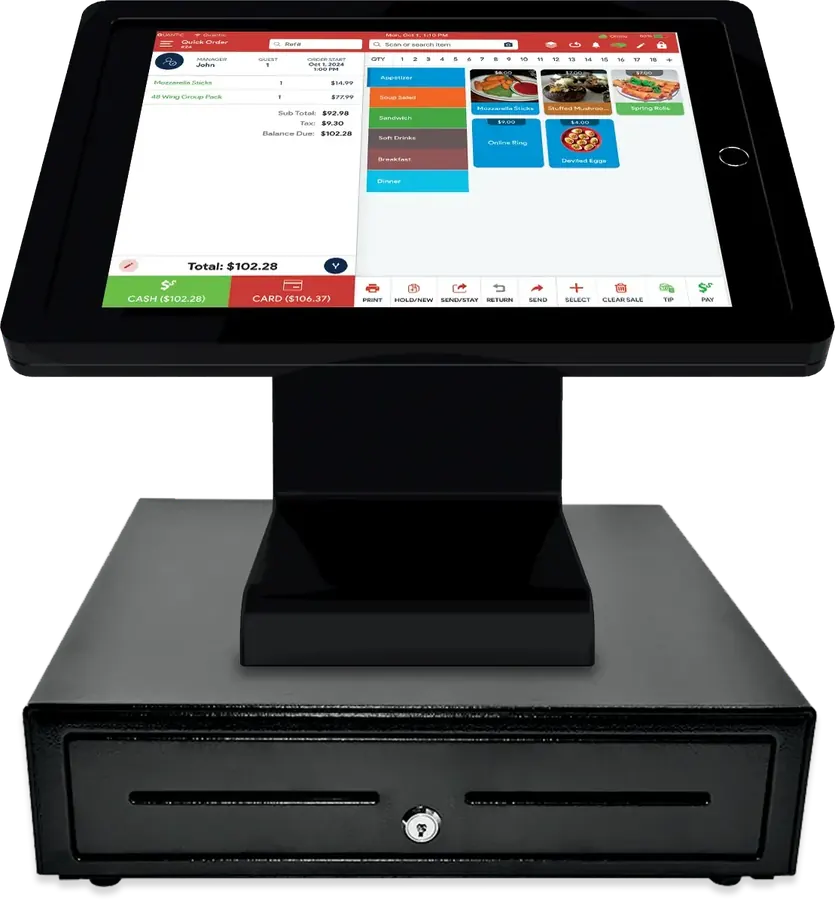
Main POS station
Where orders and checkout live
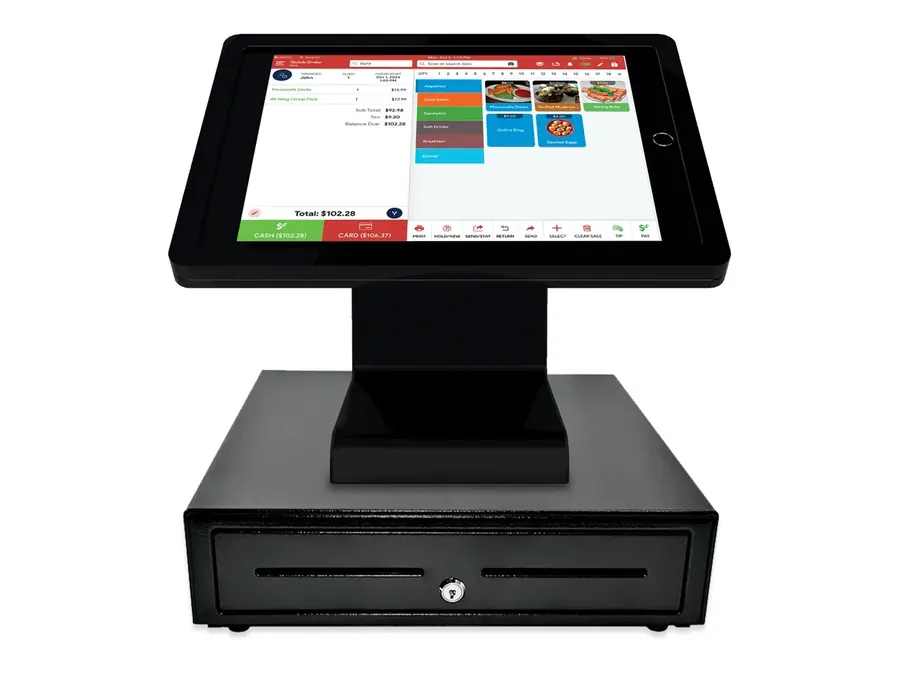
Quantic POS can run on supported iPad and certified Android point of sale hardware, giving Phase 3 options for how the main station is built around the counter and workflow.
The exact device is selected from current Quantic compatible hardware rather than assuming every merchant needs the same station.
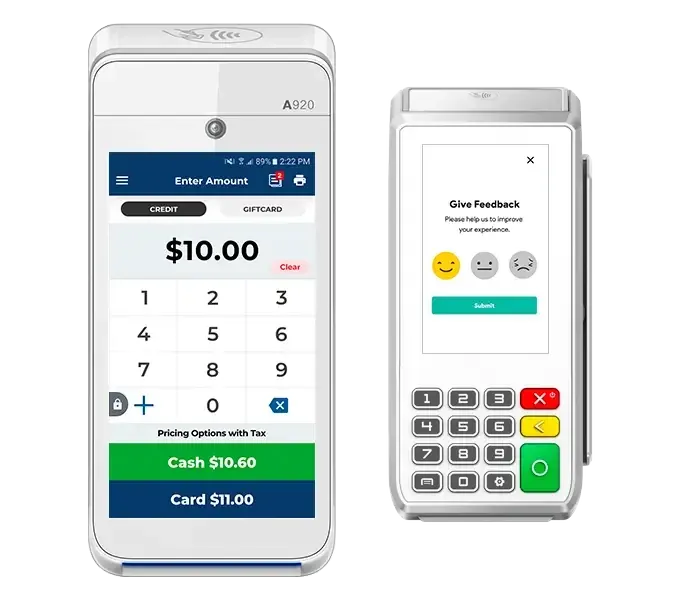
Mobile and payment devices
Payment and service away from the main screen
Depending on the approved Quantic and processing configuration, supported payment terminals and mobile devices can extend payment acceptance beyond the primary POS station.
Phase 3 confirms the device, processor, platform, and payment configuration together before recommending the hardware.
Customer display
Show the customer the transaction
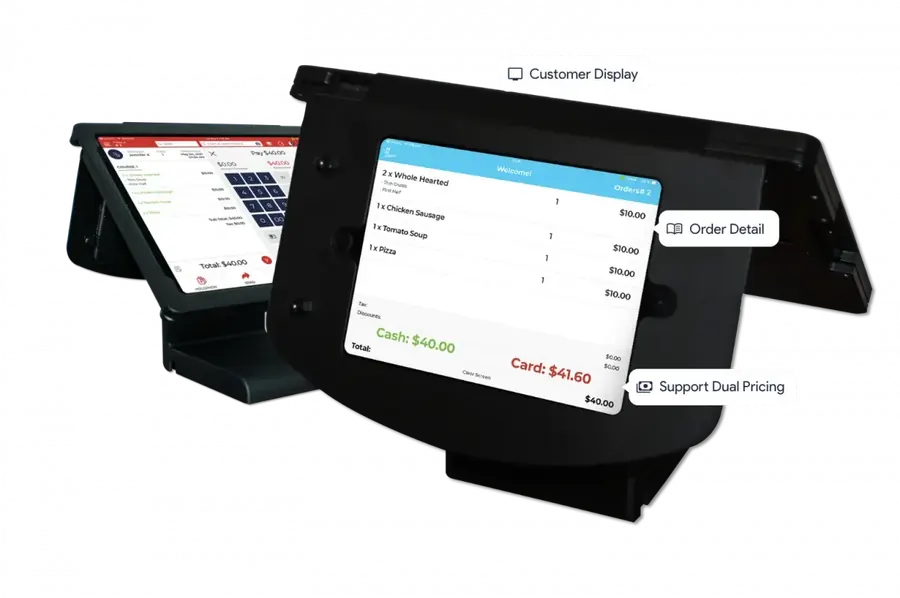
Quantic Customer Display System can show the customer items, pricing, discounts, tax, totals, and other supported checkout information while the employee works from the main POS.
Use it when a separate customer facing view improves the checkout workflow.
Kitchen display
Orders where the food is made
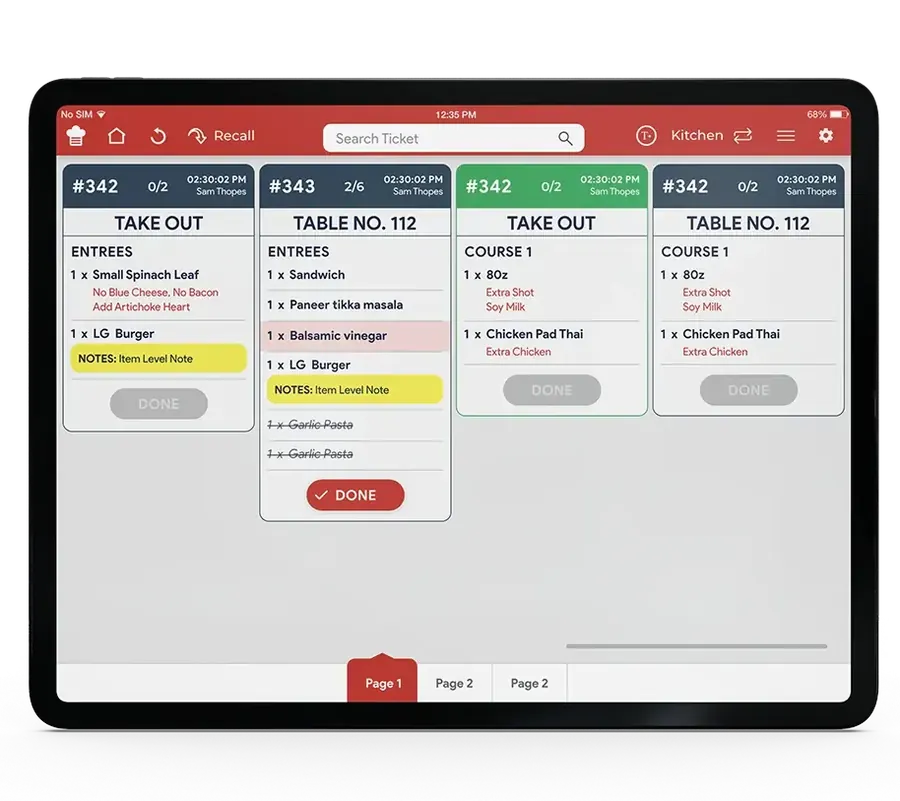
Quantic Kitchen Display System gives restaurant teams a digital view of orders and can support kitchen and expo workflows connected to the applicable Quantic ordering setup.
KDS belongs in the kitchen workflow. It is not a customer payment terminal.
Self service kiosk
Let the customer place the order
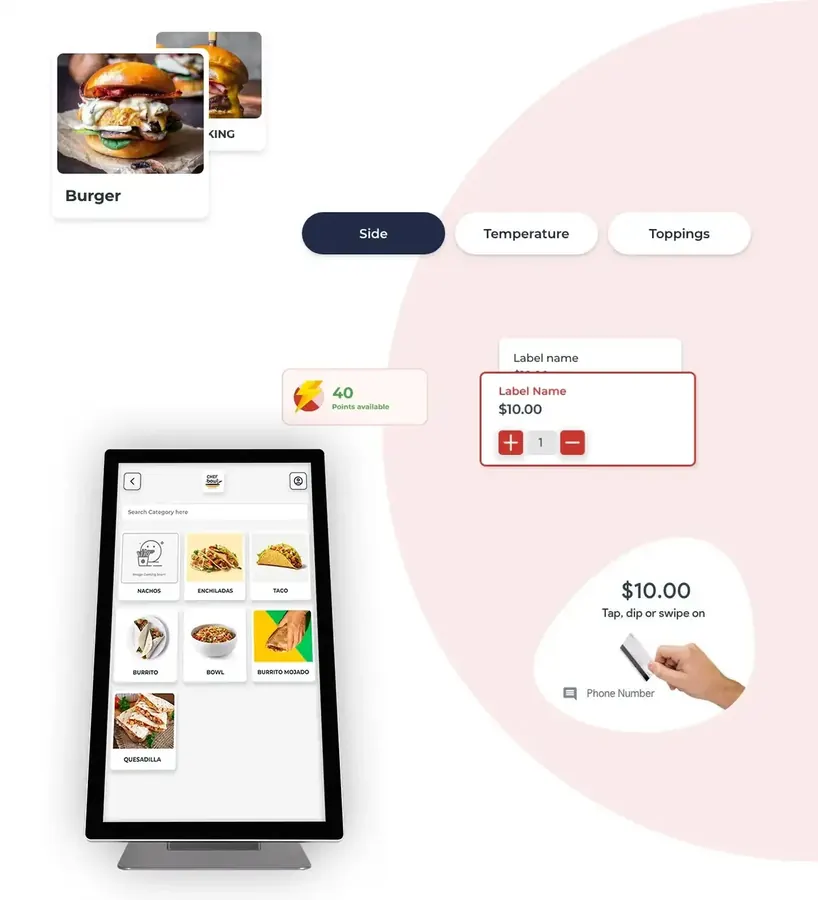
Quantic Self Ordering Kiosk can give customers a dedicated ordering experience connected to the applicable Quantic restaurant workflow.
A kiosk should be added when self service solves a real ordering problem, not simply because the option exists.
Compatibility is part of the quote.
Quantic supports a broad range of hardware, but the POS device, payment terminal, printer, scanner, display, and other peripherals still need to match the Quantic platform and merchant configuration being implemented.
Phase 3 confirms the exact supported equipment before the merchant approves the setup.
Build the hardware around the operation.
A restaurant may need POS stations, handheld payments, customer displays, kitchen screens, and a kiosk. A retailer may need a station, scanner, printer, and payment device. Another business may need far less.
Product photography supplied by Quantic. Compatible hardware shown is not manufactured by Quantic unless identified as a Quantic product.
Who we usually put on Quantic.
These pages go into what changes for that kind of business. The tickets, the card mix, and which pricing route is worth more.
Restaurants & bars
Tips, splits, and a Friday night that cannot go down.
See the setup →
Retail & shops
Inventory that matches, and a line that moves.
See the setup →
C-store & fuel
Thin margins, and more debit than almost anyone.
See the setup →
Salons & spas
Booking, tips, and stylists who need paying out correctly.
See the setup →
High-risk
You have been shut off before. We start from there.
See the setup →
Quantic is flexible.
Price the setup you will actually run.
Quantic can be configured very differently from one merchant to the next. The software tier, devices, locations, modules, peripherals, payment setup, and other services can all change what the business actually pays.
That flexibility is useful only if the quote makes each piece understandable before the merchant approves it.
Software tier
Quantic offers different software configurations based on the capabilities the business needs.
The applicable software cost can depend on the selected tier, stations, locations, features, and commercial arrangement.
Additional Quantic products
Kitchen displays, customer displays, kiosks, online ordering, ecommerce, loyalty, and other Quantic capabilities may be part of the configuration when the business needs them.
Do not assume every function is included in every Quantic setup.
Hardware and peripherals
The main POS device, displays, printers, scanners, cash drawers, kitchen screens, kiosk hardware, and other equipment can change the total setup.
Hardware terms should be shown clearly because different purchase, finance, lease, or bundle arrangements may be available depending on the configuration.
Payment devices
The payment terminal or mobile payment device must match the Quantic platform, processor, and merchant configuration being implemented.
Different approved payment devices can create different hardware and configuration costs.
Payment processing
Quantic is designed to support multiple processing relationships, but the actual processing cost still depends on the merchant, approved processor, payment mix, transaction volume, average card transaction, and pricing structure being used.
Evaluate the processing economics using the merchant's real numbers.
Quote the configuration, not the demo
A demo may show more devices, features, and Quantic products than the business will actually use.
The merchant quote should reflect the setup being implemented now and make optional additions easy to identify separately.
Flexibility should not make the quote confusing
If the setup includes software, devices, additional Quantic products, peripherals, payment terminals, processing, or another service, the merchant should be able to see what each applicable piece is for.
Quantic pricing depends on the configuration.
Software tiers, hardware, products, devices, commercial terms, and payment relationships can change over time. Phase 3 confirms the current setup and applicable costs before the merchant approves it.
Flexibility only helps if you know what you are paying for.
Build the Quantic configuration around what the business actually uses today. Add more when the workflow justifies it.
Quantic is flexible.
Somebody still has to design the right setup.
Quantic gives the business a lot of ways to configure the point of sale. That flexibility is useful only when the software, devices, payment terminals, displays, peripherals, and processing relationship are designed around the way the business actually operates.
Phase 3 helps turn those choices into one working merchant setup.
Start with the workflow
We look at how orders, checkout, inventory, staff, locations, kitchen operations, customer interaction, and payments move through the business before deciding which Quantic configuration belongs there.
The merchant should not have to design the POS from a product catalog.
Match the hardware to Quantic
Quantic supports multiple hardware configurations, but the main POS device, payment terminal, printer, scanner, display, kitchen screen, kiosk, and other peripherals still need to be compatible with the setup being implemented.
Phase 3 confirms the applicable equipment before the merchant approves it.
Build the payment setup around it
The payment terminal, processor relationship, pricing structure, and Quantic configuration need to work together.
Phase 3 reviews the merchant's actual payment requirements before recommending the processing setup.
Coordinate the implementation
Phase 3 coordinates the implementation work that applies to the approved Quantic setup so the merchant knows what needs to be configured, tested, and ready before launch.
The exact implementation depends on the business, software, devices, products, integrations, and existing system being replaced or kept.
Support after launch
Payment and equipment support is available 24/7 from a US based team.
Depending on the issue, the next step may also involve Quantic, a payment terminal provider, an integration provider, the processor, or another technology involved in the setup.
Phase 3 Digital if you need it
Phase 3 can also build and manage the public business website and provide ongoing search and advertising services through Phase 3 Digital.
Digital stands on its own. Quantic and payment processing are not required.
Managed Website service is $99 a month with Phase 3 processing or $199 a month as Standalone Digital.
The value is not adding more Quantic.
The value is choosing the software, hardware, payment devices, and operating tools the business actually needs and leaving out the pieces it does not.
If the business needs less, the setup should get smaller.
Ask the questions that matter
before you choose Quantic.
Quantic gives the business more ways to configure the point of sale than a simple boxed setup.
That can be a real advantage, but only if the software, hardware, payment devices, integrations, and support path are understood before the system goes live.
I have never heard of Quantic. Should that matter?
Brand recognition should not be the reason you choose or reject a point of sale system. The better questions are whether the software supports the workflows the business needs, whether the hardware and payment setup fit, whether the required integrations are available, and whether the total configuration makes sense.
Quantic should win because it fits the operation, not because the name is familiar.
Is Quantic more complicated to set up?
It can involve more decisions because the system can be configured around different devices, payment terminals, displays, restaurant or retail workflows, and other operating requirements.
That does not mean the merchant should have to figure it out alone. Phase 3 helps define the setup, identify what is required, and leave out what the business does not need.
Can I use the hardware I already have?
Possibly. Quantic supports multiple hardware configurations, but the existing POS device, payment terminal, printer, scanner, display, or other peripheral still has to be compatible with the Quantic platform and merchant configuration being implemented.
We verify the actual equipment before recommending that the merchant keep it.
What happens if I want to change processors later?
Quantic is designed to support multiple processing relationships, but that does not mean every processor, payment device, merchant account, and hardware configuration can move unchanged.
If future processor flexibility matters, understand which parts of the specific Quantic and payment setup can remain and which parts may need to change before approving the system.
Who supports the system after launch?
Phase 3 payment and equipment support is available 24/7 from a US based team.
Depending on the issue, the solution may also involve Quantic, a payment terminal provider, an integration provider, the processor, or another technology used in the merchant setup.
The merchant should know where to start when something needs attention.
Flexibility is only an advantage if the setup is clear.
Understand the software, hardware, payment relationship, integrations, implementation, and support path before approving Quantic. More options should create a better fit, not a harder system to understand.
Quantic should
earn its place.
Quantic gives the business a lot of ways to configure the point of sale. That flexibility is valuable when the business actually needs it.
Before replacing anything, understand what the current system already does well, which requirements matter most, and whether Quantic improves those workflows enough to justify the change.
Keep what already works
If the current point of sale already handles the business well and the real problem is payments, equipment, support, or another part of the setup, replacing the entire system may create more work than value.
Changing less can be the better recommendation.
Use Quantic when the flexibility matters
Quantic makes the most sense when the business benefits from configuring software, hardware, payment devices, displays, kitchen workflows, kiosks, peripherals, or other operating tools around the way it actually works.
More flexibility is useful only when the business needs the choices.
Protect the requirements the business cannot lose
If the business depends on a specific ordering, inventory, hospitality, retail, integration, reporting, or operating workflow, verify that the Quantic configuration actually supports it before replacing the current system.
The requirement should be proven before the merchant commits.
Do not buy a full POS for a payment problem
Some businesses mainly need card acceptance, invoices, payment links, recurring billing, remote payments, or another straightforward payment workflow.
If the broader point of sale functions are not needed, another Phase 3 payment setup may make more sense than Quantic. Phase 3 VT, online payments, or a simple terminal can be enough when those fit.
The goal is not to sell more Quantic.
The goal is to get the system right.
Sometimes Quantic is clearly the better setup. Sometimes another POS fits the requirement better. Sometimes the current system should stay and only the payment piece should change.
If Quantic does not fit,
compare the requirement.
Do not move away from Quantic just to choose a different logo. Identify what the business needs that Quantic is not providing, then compare the systems that actually solve that requirement.
Sometimes another POS is better. Sometimes a simpler payment setup is enough. Keeping Quantic is also a good outcome when it still fits.
Clover
Broader branded POS ecosystem
Worth comparing when the business wants a broad family of countertop, handheld, customer facing, kiosk, app, and operating options inside the Clover ecosystem.
Clover brings a lot of breadth. Make sure the business actually needs that breadth before adding the complexity.
Explore Clover →
Square
Simpler place to start
Worth comparing when the business wants a lighter starting point and the Square ecosystem already covers the checkout, payment, software, and operating functions it needs.
Simple is a strength when simple still does the job.
Explore Square →
KORONA POS
Deeper inventory and location needs
Worth comparing when detailed inventory, product management, multiple locations, or another retail operating requirement is central to the POS decision.
Define the requirement first, then verify the actual KORONA POS configuration and integrations against it.
Explore KORONA POS →
Union
Bar and hospitality workflows
Worth comparing when bar service, tabs, hospitality operations, speed at checkout, or another venue specific workflow needs to be evaluated against the Quantic setup.
Compare the actual venue workflow rather than assuming every bar needs the same POS.
Explore Union →
SumUp
Lighter checkout
Worth comparing when the business needs a straightforward checkout or payment setup and does not need the broader Quantic configuration.
The simpler system can be the better system when it still covers the workflow.
Explore SumUp →
What if you do not need another POS?
If the real requirement is card acceptance, invoices, payment links, recurring billing, remote payments, or another simpler payment workflow, replacing Quantic with another full POS may solve the wrong problem.
Compare the payment options before replacing the operating system.
Do not leave Quantic for a different logo.
Leave it for a better fit.
Name the requirement Quantic is no longer meeting. Then compare the POS or payment options that solve that problem. If Quantic still handles the business well, keeping it is a perfectly good outcome.
Clover is a trademark of Fiserv, Inc. Square is a trademark of Block, Inc. Quantic, KORONA POS, Union and SumUp are trademarks of their respective owners. Product photography is supplied by the respective manufacturer and remains their property. Phase 3 Payments is an authorised reseller. Product names are used descriptively and do not imply endorsement.
Before you choose Quantic,
get these answers.
Quantic gives the business a lot of ways to configure the point of sale. That makes fit, hardware compatibility, payment setup, implementation, and total cost worth understanding before the merchant approves the system.
What does processor agnostic actually mean for me?
Quantic is designed to support multiple processing relationships rather than requiring every merchant to use one universal processor.
That flexibility does not mean every processor, payment device, merchant account, and Quantic configuration automatically work together.
Phase 3 confirms the processor relationship, payment device, Quantic platform, and merchant configuration before recommending the setup.
Can Quantic handle a full service restaurant?
Yes, Quantic offers point of sale workflows for full service restaurants.
Depending on the approved configuration, Quantic can support functions such as table service, orders, split checks, course workflows, kitchen communication, customer checkout, and other restaurant operations.
The exact software, devices, kitchen setup, integrations, and payment configuration still need to match the restaurant.
Can Quantic work for retail too?
Yes. Quantic also supports retail point of sale workflows.
Depending on the configuration, the business may use Quantic for items, inventory, checkout, customer activity, reporting, scanners, scales, and other applicable retail functions.
The actual store requirements should determine whether Quantic fits.
Does Quantic support online ordering and ecommerce?
Quantic offers ecommerce and online ordering capabilities that can work with applicable restaurant and retail Quantic configurations.
The exact online ordering, ecommerce, menu, product, inventory, fulfillment, and payment workflow should be reviewed before adding it to the merchant setup.
What hardware can I use with Quantic?
Quantic supports multiple certified hardware configurations rather than one proprietary device family.
Depending on the setup, that can include supported tablet or Android POS hardware, payment terminals, printers, scanners, customer displays, kitchen screens, kiosks, and other compatible peripherals.
Phase 3 confirms the exact supported equipment before the merchant approves the setup.
Can I keep hardware I already own?
Possibly.
Existing POS devices, payment terminals, printers, scanners, displays, or other peripherals need to be checked against the Quantic platform and merchant configuration being implemented.
If existing equipment is compatible and still makes sense for the workflow, keeping it can be a good outcome.
Does Quantic support kitchen screens, customer displays, and kiosks?
Quantic offers Kitchen Display System, Customer Display System, and Self Ordering Kiosk products for applicable configurations.
Each one solves a different operating problem.
Kitchen screens belong in the food preparation workflow. Customer displays give the customer a separate view during checkout. Kiosks can support customer ordering when self service makes sense for the business.
What does Quantic actually cost?
The total depends on the configuration the business will actually use.
Applicable costs can include the Quantic software tier, additional Quantic products, POS hardware, payment devices, peripherals, locations or stations, payment processing, and other services involved in the setup.
Phase 3 should show the applicable pieces clearly before the merchant approves the quote.
Can I use dual pricing with Quantic?
Quantic supports payment program configurations that may include dual pricing or related approaches when the approved processing relationship and merchant setup support them.
That does not mean every Quantic merchant should use dual pricing.
Phase 3 should review the merchant's actual card mix, processing volume, current cost, average card transaction, customer experience, and approved setup before recommending a pricing program.
How long does a Quantic implementation take?
It depends on what is being implemented.
A simple Quantic setup is different from a restaurant or retailer using multiple stations, payment devices, menus or items, kitchen displays, customer displays, kiosks, online ordering, integrations, or other configuration work.
Phase 3 should review the actual project and provide a realistic implementation plan before anything changes.
Who supports Quantic after launch?
Phase 3 payment and equipment support is available 24/7 from a US based team.
Depending on the issue, the next step may also involve Quantic, a payment device provider, an integration provider, the processor, or another technology involved in the merchant setup.
The merchant should know where to start when something needs attention.
Can Phase 3 handle my website too?
Yes. Phase 3 Digital can provide the managed Website service separately from Quantic.
Website pricing is $99 a month with Phase 3 processing or $199 a month as Standalone Digital.
Phase 3 Digital also offers ongoing search work and paid advertising management through the applicable Digital plans.
Quantic and payment processing are not required to use Phase 3 Digital.
Still not sure Quantic is the one?
Tell us what isn't working.
We'll tell you what's worth changing.
Tell us what you are trying to fix or improve. We will tell you what should stay, what is worth changing and where Phase 3 can help.
Sometimes the honest answer is nothing.